Bald-Faced Hornets in Athens, GA
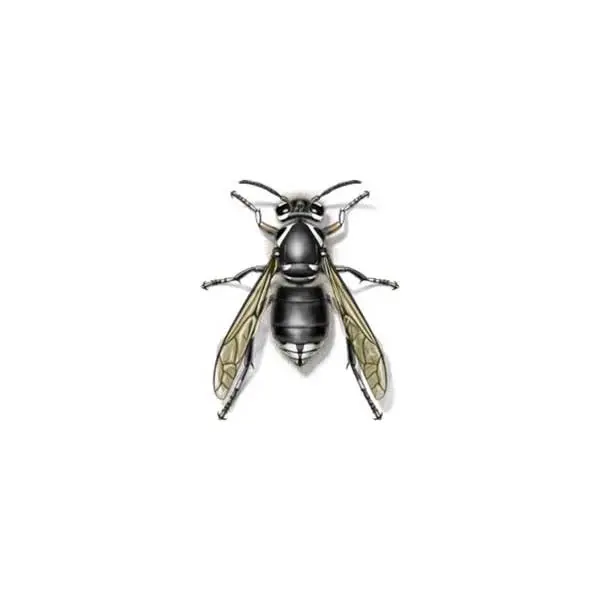
Named for the ivory-white markings on its face, the bald-faced hornet greatly resembles yellowjacket wasps. It is often mistaken for other common stinging insects due to its similar appearance. Despite this confusion, it can be identified by its distinctive black-and-white coloration and large paper nest. These hornets are relatively large flying insects and will defend their nests aggressively when they perceive a threat. They live in large colonies that can include thousands of members and would be less of a concern if they did not build nests in attics, wall voids, and landscape structures.
Bald-Faced Hornet Habitat
The bald-faced hornet frequently builds its large paper nests around areas where people live, work, and spend time outdoors. Worker hornets begin construction in spring and early summer by chewing natural wood fibers into a paper-like material. They commonly place nests in trees, under eaves, on building fixtures, and in children’s playhouses. These gray, egg-shaped nests can grow quite large, sometimes reaching 24 inches long and 30 inches wide. Each nest supports a growing colony throughout the warm months. When fully developed, the nest is often about the size of a football or basketball.
Bald-Faced Hornet Behavior, Threats, or Dangers
Bald-faced hornet stings are venomous and can cause swelling and pain for about 24 hours. Those with bee sting allergies may experience comparable reactions. These hornets commonly forage in trash receptacles and feed on food and drinks consumed outdoors, as well as ripe fruit in agricultural and garden areas. In the fall, dropping temperatures and reduced food availability prompt reproductive wasps to search for warm shelter, which can lead them into homes. Like other stinging insects, they will defend themselves aggressively if threatened. If a nest is found near human activity, a professional hornet control company should be contacted.