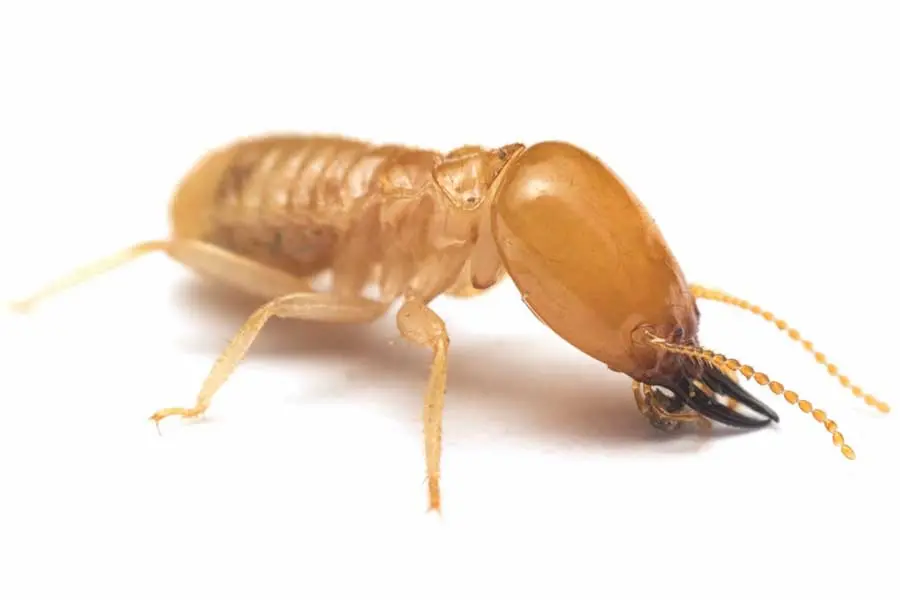
Termites are small pests that can easily be mistaken for flying ants, especially during swarming season. While different termite species may vary in appearance, they have several characteristics in common, including:
- Size: Termites typically range from ¼ to ½ inch in length.
- Color: Termite colors vary by caste, ranging from off-white to dark brown.
- Body Structure: Termites have three body sections: a head, thorax, and abdomen.
- Legs and Antennae: Adult termites have six legs and straight antennae.
- Wings: Swarming termites, also called reproductives or alates, have wings.
Identifying Termites by Type
Termites can look different depending on their species and role within the colony. They are also difficult to spot because they typically stay hidden, making professional identification the best way to confirm an infestation. Discover the differences between termite species here:
- Dampwood Termites: Dampwood termites are larger than most other termite species and may have a reddish tint on their bodies.
- Drywood Termites: Drywood termites can range from yellow to brown in color and have wings that may appear transparent or slightly gray.
- Subterranean Termites: Subterranean termites typically range in color from off-white to dark brown or nearly black.
Signs of Termites Around Your Property
Termites are difficult pests to detect, which makes them especially concerning for homeowners. Unlike many other insects, termites are rarely seen because they often remain hidden inside the structure of a home. Because of this, proper identification is best handled by a trained professional. The termite experts at American Pest Control, Inc. can inspect your property and determine which type of termites may be present.
At American Pest Control, Inc., we’re always ready to help you with your pest control needs. Contact us for a free, no obligation quote, or call us at (706) 546-1490 to get started today.

Leave your information below and we’ll be in touch shortly. After hours calls will be returned the next business day.
The Average Lifespan of Termites
Termites have different castes within a colony, and each caste has its own average lifespan. Some termites may live only a short time, while others can survive for many years. On average, termites live for the following amounts of time:
- Workers and Soldiers: Worker and soldier termites typically live for about one to two years.
- Reproductive Termites: Reproductive termites, also called alates or swarmers, can survive for nearly four years.
- Termite Queen: The termite queen has the longest lifespan and may live for 20 years or more under ideal conditions.
Understanding Termite Castes
Termites are divided into three primary castes that determine their responsibilities within the colony: workers, soldiers, and alates (also known as swarmers). Each caste has a specific role that helps the colony survive and function properly.
Scientists are still studying exactly how termites are assigned to a caste. Current research suggests that social interactions and environmental conditions influence this process based on what the colony needs. Some researchers believe termites may even be able to change roles when necessary. Because each caste serves a different purpose, they can also have noticeable differences in appearance:
- Workers: These make up the majority of a colony and typically have an off-white to creamy-colored appearance. Workers are responsible for gathering food, maintaining the colony, and caring for developing termites.
- Soldiers: Often confused for ants, soldier termites have large, dark heads with powerful mandibles. Their primary role is defending the colony from threats and protecting other termites.
- Alates/Swarmers: Reproductive termites vary in color, but they all have wings that are eventually shed. These termites leave established colonies to mate and create new colonies.
- Queen: The termite queen is the primary egg producer within the colony and can grow much larger than other termites. She can live for many years and helps maintain the growth and survival of the colony.
If you discover termites at any stage of their life cycle, it’s important to contact a local termite professional right away. The sooner a termite infestation is addressed, the better the chances of preventing costly damage.