Earwigs in Athens, GA
The name earwig comes from an old myth suggesting they crawl into the ears of sleeping people and damage the brain. This superstition is unfounded, as earwigs do not behave in this way. They prefer moist, dark places, but only for hiding during the day rather than nighttime activity. After dark, they become active and feed on insects and plant material. Earwigs are most commonly found in the southern and southwestern United States and go into a dormant state during winter. They may also move indoors when outside conditions are too dry, hot, or cold to survive comfortably.
Earwig Habitat
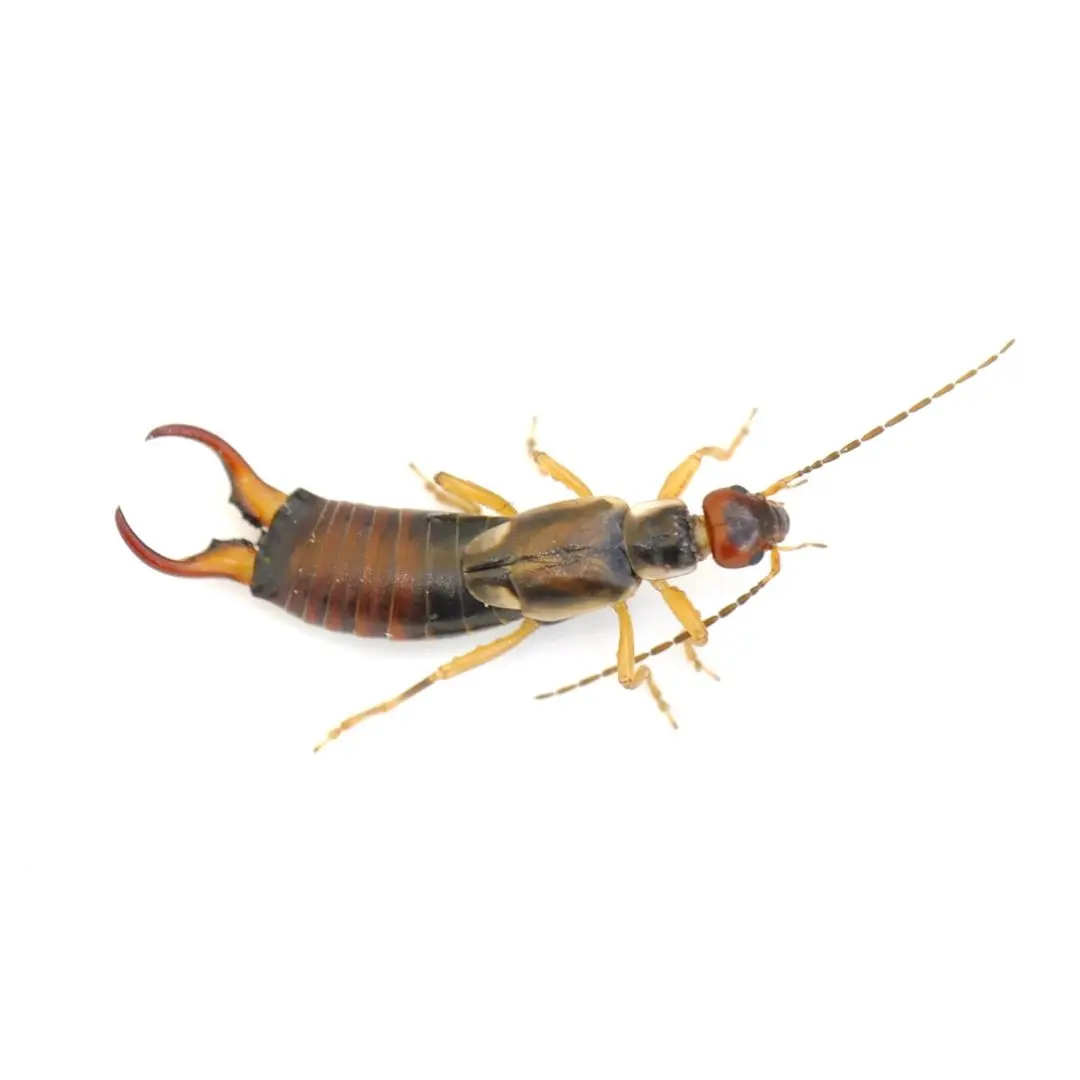
Earwigs have a varied diet that includes both plant and animal matter. They feed on leaves, flowers, fruits, fungi, aphids, and even larger insects like flies, which they capture using their pincer-like cerci. Moisture levels strongly influence where they are most active and where they gather. During the day, they hide under logs, rocks, boards, or dense vegetation such as vines and weeds. Around homes, they are often found in damp areas like cracks near swimming pools, flower bed mulch, potted plants, and leaf litter, while indoors they may congregate in cardboard boxes, kitchens, and bathrooms.
Earwig Behaviors, Threats, or Dangers
Although earwigs are not known to bite or spread disease, they can deliver a pinch that may hurt. Their pincers typically do not break the skin, but they can still cause discomfort. During spring and summer, they are mostly viewed as nuisance pests. They can damage gardens by chewing irregular holes in leaves and flower blossoms. Earwigs may also enter homes through gaps in siding and foundations, or hitchhike indoors on items like firewood, potted plants, and cardboard boxes. If earwig activity becomes excessive, contact a pest control professional.