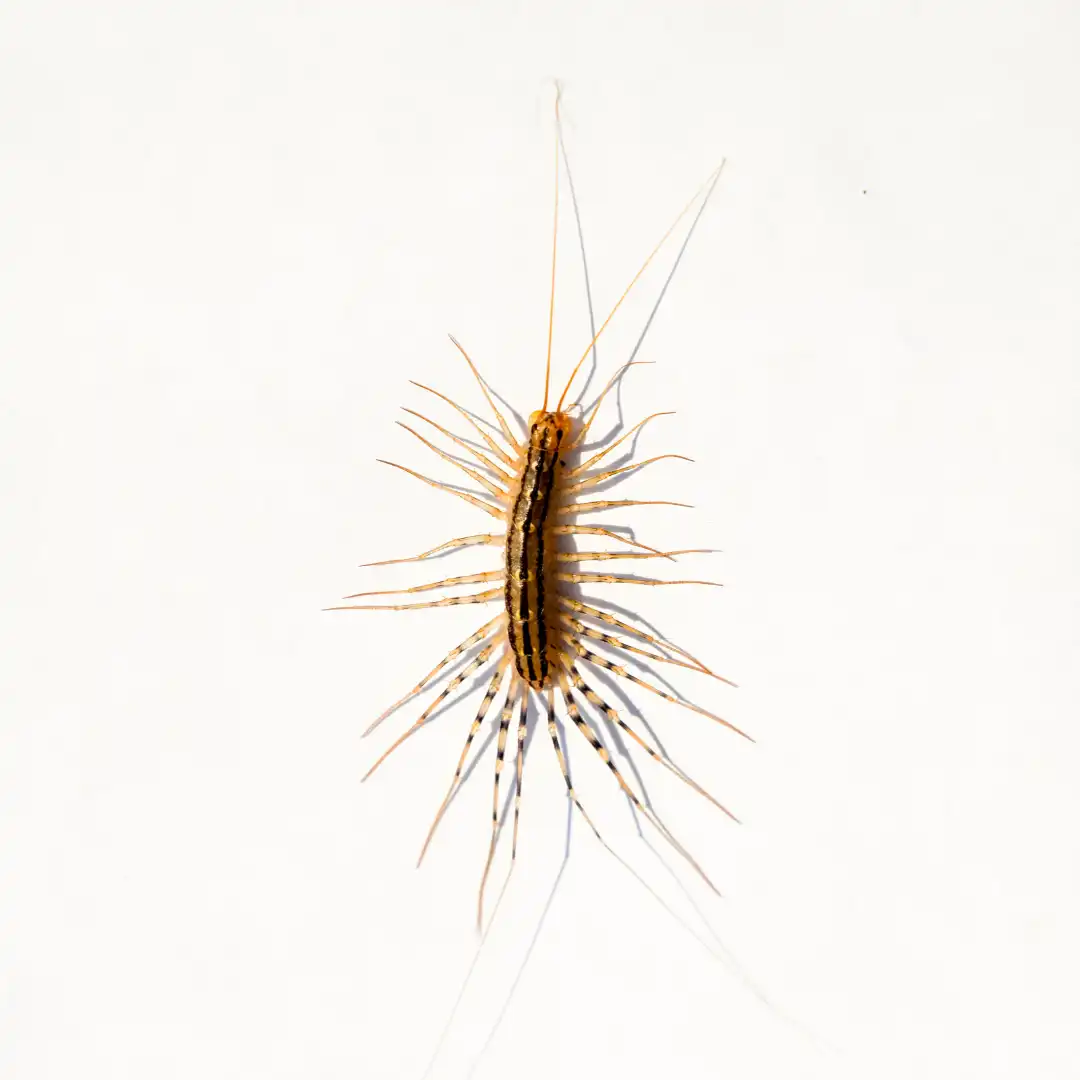
House Centipedes in Athens, GA
House centipedes are fast-moving predators that rely on speed to catch their prey and are found throughout the United States. They are easily recognized by their fifteen pairs of very long, slender legs. Despite their intimidating appearance, they are beneficial invertebrates that help control pests such as cockroaches and spiders. They can live both indoors and outdoors, and finding one trapped in a sink or bathtub can be unsettling. While harmless outside, they are often considered pests when they enter shared living spaces.
House Centipede Habitat
Moist environments attract house centipedes, which can be found outside beneath stones, boards, sticks, and in damp leaf litter or decaying organic matter. They are especially active at night when hunting for prey. Inside homes, they typically inhabit moist cellars, bathrooms, and damp closets while feeding on insects and spiders. They move rapidly toward dark, sheltered areas when disturbed. If house centipedes are numerous, it may signal a hidden moisture issue that should be corrected.
House Centipede Behaviors, Threats, or Dangers
House centipedes use a pair of poison claws located behind their head to inject venom and paralyze small insects, which are their usual prey. Although their jaws are weak, they can occasionally penetrate human skin with difficulty. When bites do occur, they may cause swelling and pain, but are typically no worse than a bee sting. These centipedes are considered nuisance pests and often enter yards while searching for food. If they find prey near exterior walls and cracks or crevices are present, they may accidentally enter the home. If you are dealing with house centipedes, contact a local exterminator.