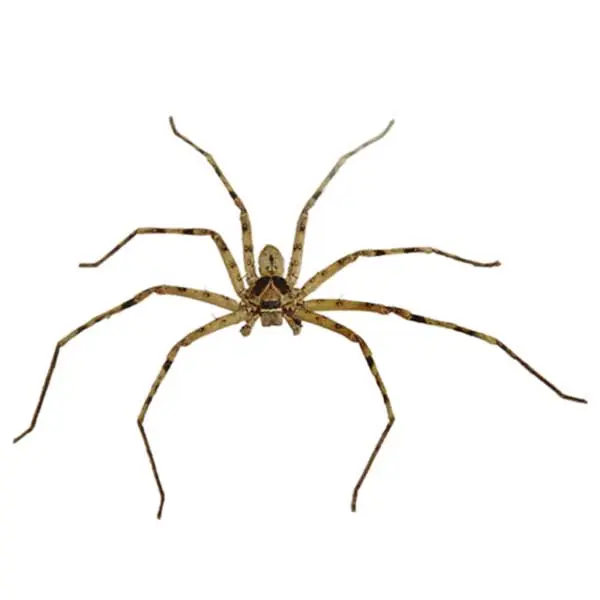
Huntsman Spiders in Athens, GA
The huntsman spider ranks among the largest spider species worldwide and is often called the giant crab spider or banana spider. Its wide leg span gives it a distinct, crab-like appearance. While it may be mistaken for a brown recluse, it is not venomous and is not closely related. Unlike many spiders, huntsman spiders do not spin webs to trap prey. They actively chase their prey and are sometimes found inside homes.
Huntsman Spider Habitat
These spiders move quickly and tend to hide in dark, secluded areas during the day, becoming active at night to hunt. Huntsman spiders are commonly found beneath tree bark, within woodpiles, in buildings, and sometimes even in cars. Their flattened bodies allow them to squeeze through tight spaces, giving them access to homes, barns, sheds, and other protected environments. They are not well-suited to cold climates and cannot survive outdoors in freezing temperatures. As a result, they often seek shelter indoors during colder weather, hiding under furniture, in cabinets, behind wall décor, and in closets or garages.
Huntsman Spider Behaviors, Threats, or Dangers
Although huntsman spiders can deliver a painful bite, their venom is not strong enough to typically require medical treatment. They are generally non-aggressive and will often run away instead of biting when disturbed. Huntsman spiders are helpful predators, feeding on pests such as cockroaches, moths, and occasionally small reptiles. If you are dealing with huntsman spider problems on your property, contact your local spider exterminators.