You should call a rodent exterminator immediately if you notice recurring droppings, hear scratching in walls, find gnawed wiring or pipes, or spot a rodent during daylight hours. While single stray mice can occasionally be trapped, confirmed rats, foul ammonia odors, or unresolved activity require licensed professional exclusion and eradication.
Key Takeaways:
- Immediate Danger Threshold: A daylight sighting or confirmed rat presence signals an overcrowded nest and calls for same-day professional intervention.
- DIY Limitation: Store-bought snap traps only address surface-level strays; they cannot locate hidden breeding colonies or seal structural breaches.
- Property Protection: Immediate extermination prevents high-cost structural emergencies, including electrical fires from chewed wiring, ruined insulation, and punctured plumbing.
- Regional Risk Factors: Mountain freezes in Western NC, roof rat pressure across Upstate SC, and high humidity in North GA demand climate-specific control methods.
Where you live directly shapes the kind of rodent threat you face. Across Georgia’s humid river valleys, the dense mountain forests of Western North Carolina, and the rolling hills of Upstate South Carolina, shifting weather and natural cover create intense seasonal pressure, driving wild rodents inside our buildings for warmth, food, and harborage.
Once mice or rats slip into your crawl space, attic, or walls, a minor nuisance can quickly turn into ruined property and serious health hazards. Knowing what warning signs to look for—and knowing when simple snap traps will not cut it—is the best way to protect your building and your health.
Warning Signs You Have a Rodent Problem
Rats and mice mostly move around in the dark. If you see one out in the open during the day, it usually means their nests are already crowded. Look for these clear warning signs:
- Greasy Smudge Marks: Rats have oily coats. As they run along baseboards, wall framing, and foundation edges, they leave dark, greasy rub marks behind.
- Sounds in the Night: Scurrying, scratching, or squeaking noises inside your walls, ceilings, or under the floorboards after dark.
- Stale, Musky Smells: A strong, ammonia-like odor from rodent urine and body oils that builds up in poorly ventilated spaces like crawl spaces, attics, and utility closets.
- Torn Insulation and Shredded Materials: Ripped fiberglass batting in crawl spaces or trampled cellulose in attics, often mixed with shredded cardboard, paper, or leaves to build nests.
- Fresh Chew Marks: Rough teeth marks on wooden wall studs, baseboards, PVC drainpipes, and exterior siding.
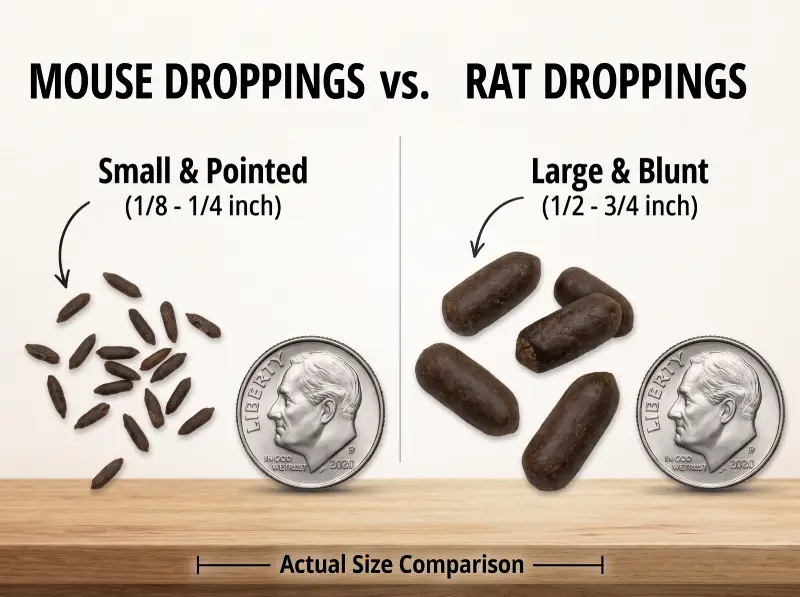
- Droppings: Mouse poop is smaller (1/8” – 1/4”) and usually scattered along pantry shelves, kitchen baseboards, and pipe openings. Rat droppings are larger (½” – ¾”), blunt-ended pellets, mostly found in attics, crawl spaces, and drop ceilings.
At American Pest Control, Inc., we’re always ready to help you with your pest control needs. Contact us for a free, no obligation quote, or call us at (706) 546-1490 to get started today.

Leave your information below and we’ll be in touch shortly. After hours calls will be returned the next business day.
The Real Dangers: Costly Damage and Serious Illness
A rodent problem is never just about the “gross factor.” Because rodents possess continuously growing incisors, they are biologically driven to gnaw on whatever they encounter to keep their teeth worn down. When an infestation takes hold, that gnawing behavior and waste accumulation lead to two major categories of loss:
Structural and Fire Hazards
- Electrical Fire Risks: Rodents routinely strip the plastic shielding from Romex wiring inside walls and attics. Exposed conductors arc, short-circuit, and create hidden fire hazards behind drywall.
- Plumbing and Water Leaks: Both rats and mice chew through modern PEX water lines and flexible HVAC condensation pipes, sparking slow structural water leaks, rot, and subfloor mold.
- Thermal Envelope Breakdown: Rodents tunnel through insulation and saturate it with waste. This destroys your building’s R-value, drives up monthly heating and cooling bills, and ruins crawl space vapor barriers.
Health Risks and Pathogen Exposure
- Airborne Illness: Disturbing dried rodent droppings, urine, or nest dust aerosolizes dangerous viral particles, including Hantavirus.
- Food Supply Contamination: Rodents track bacteria like Salmonella directly onto kitchen counters, pantry stock, commercial prep areas, and food containers.
- Moisture-Borne Bacteria: Direct skin contact with fresh, damp rodent urine can spread bacterial infections such as Leptospirosis through small cuts or mucous membranes.
- Secondary Pests: Rodents carry ectoparasites, quickly introducing biting fleas, ticks, and mites into living and working spaces.
Rats vs. Mice: Which Is Worse?
Any rodent infestation requires immediate professional removal. Both pests carry disease, ruin insulation, and breed rapidly. However, if you are wondering which pest presents the greater emergency, rats are significantly more dangerous, destructive, and difficult to eradicate.
While a mouse problem can spread contamination quickly, a rat presence escalates structural and operational threats to an entirely different level:
- Massive Jaw Strength: While mice chew soft materials, wires, and thin wood, rats can gnaw clean through heavy structural timber, thick PVC drains, concrete mortar joints, and soft metals like aluminum and lead flashing.
- Severe Neophobia (Trap Shyness): Mice are naturally curious exploratory foragers, making them relatively easy to catch with standard snap traps. Rats, however, are neophobic—they are biologically suspicious of anything new in their territory. They will actively avoid newly placed traps, altered runways, or unfamiliar food sources for weeks, making DIY rat eradication almost impossible.
- Rapid Physical Ruin: Because of their physical size and the volume of waste they produce, a small pack of Norway rats or roof rats can destroy attic insulation, ruin crawl space encapsulations, and chew through primary utility lines in a fraction of the time it takes a mouse nest.
- Confrontational Behavior: Mice flee immediately when cornered. A trapped or threatened rat is far more likely to charge, scratch, and bite pets, workers, or residents.
The verdict: Never ignore a mouse problem (even if it’s just one mouse), but if you confirm you are dealing with rats, call a licensed rodent exterminator immediately.
Local Rodent Pressures: GA, Western NC & Upstate SC
Our region’s varied terrain creates different challenges depending on where your property sits:
- Western North Carolina (Franklin & Macon County): High elevations bring long, freezing winters. Cold weather drives deer mice and woodrats into basements, crawl spaces, and seasonal cabins. These pests slip through tiny foundation cracks or gaps around chimney flashing to stay warm.
- Upstate South Carolina (Anderson County & the Piedmont): Neighborhoods and commercial lots near Lake Hartwell and the I-85 corridor see high levels of roof rats. These agile climbers use tree branches overhanging your roof to enter through eaves, attic vents, and fascia boards.
- North Georgia Foothills: High summer humidity causes rodent urine in crawl spaces to break down into heavy, sour odors. Damaged vapor barriers allow ground moisture to mix with waste, fueling rot and mold.
(Note on Squirrels: Tree squirrels, like gray squirrels and flying squirrels, are protected wildlife in Georgia, North Carolina, and South Carolina. They cannot be treated with common rat poisons. They require humane exclusion, one-way exit doors, and structural repairs.)
When to Skip the DIY Traps and Call an Exterminator
A single snap trap might catch an occasional stray mouse that slipped through an open garage door. However, professional help is required if you experience any of the following:
- You Keep Catching Them: If you trap three or four mice and keep finding fresh droppings, you are not dealing with strays. You have an active breeding nest inside the structure.
- You See Them in Daylight: Rodents avoid people and daylight. Seeing one during the day means the nesting spaces inside your walls or attic are overflowing.
- You Notice Foul Odors or Soiled Insulation: Once foul smells enter living areas, basic snap traps won’t solve the problem. The contaminated insulation and nesting materials must be professionally treated.
- You Can’t Find Where They Get In: A small house mouse can squeeze through a gap the size of a dime (1/4 inch). A rat only needs an opening the size of a quarter. Locating and sealing every tiny hole requires professional inspection tools.
Leave your information below and we’ll be in touch shortly. After hours calls will be returned the next business day.
What to Expect from Professional Rodent Control
Real extermination goes far beyond setting a few traps. A complete Integrated Pest Management (IPM) plan follows four critical steps:
- Complete Diagnostic Inspection: Technicians identify the exact rodent species, map out every entry point along the roofline, foundation, and crawl space, and locate all nesting zones.
- Structural Exclusion (Sealing the Building): Pros seal every gap using materials rodents cannot chew through, including heavy galvanized steel mesh, metal flashing, and weather-resistant sealants.
- Targeted Removal: Safe placement of tamper-resistant exterior bait stations and interior mechanical traps placed out of reach of children and pets.
- Sanitation and Cleanup: Technicians sanitize waste areas to eliminate dangerous germs and wipe out the invisible scent trails that draw new rodents to your property.
Protect Your Property with Permanent Rodent Exclusion
Whether you run a business along the I-85 corridor in Anderson or own a mountain cabin near Franklin, seeing a rodent inside is never an isolated problem. A rodent infestation is an active structural and biological hazardt. Every week an infestation goes unaddressed increases the likelihood of chewed electrical wiring, contaminated HVAC ducts, and saturated crawl space insulation.
Stopping an active intrusion requires comprehensive structural defense. At American Pest Control, Inc., our licensed rodent control specialists deliver complete, warrantied rodent exclusion and eradication tailored to properties across the region – including North Georgia, Franklin, NC, and Anderson, SC. From emergency rat removal to attic decontamination and full-perimeter sealing, we eliminate the current colony and permanently shut down their access routes.
Stop the cycle of re-infestation. Call American Pest Control, Inc. now for a detailed structural rodent inspection, or request your on-site quote online today.
Back to Rodent Control