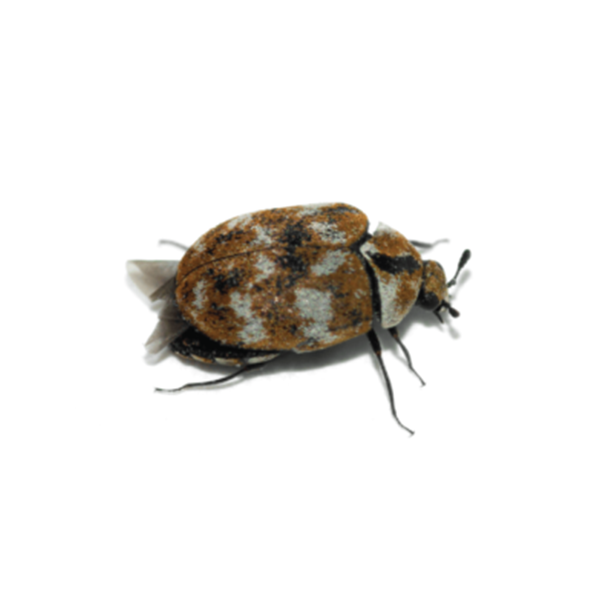
Varied Carpet Beetles in Athens, GA
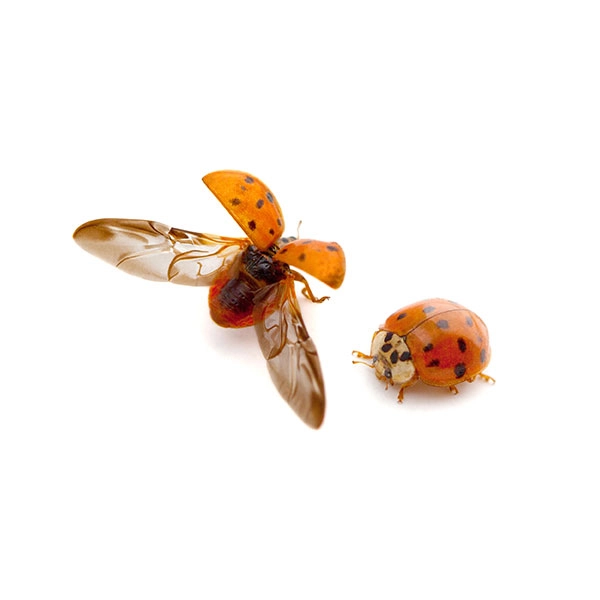
Named for the different colors on its back, the varied carpet beetle is considered the most common species found in Athens, GA. They are often introduced into homes through open windows or on clothing and pets. Carpet beetles are small insects that feed on natural fibers such as carpet. The larvae are usually the first stage noticed by homeowners, appearing striped, bristly, and fuzzy in texture. Another indicator of an infestation is the shed skins left behind as the larvae mature.
Varied Carpet Beetle Habitat
Outdoors, female varied carpet beetles search for spider webs, bee and wasp nests, or bird nests as places to lay their eggs. These sites provide food sources such as dead insects, beeswax, pollen, feathers, and other organic debris for the developing larvae. While often unnoticed, these beetles are present in many homes. In small numbers, they can be beneficial by helping break down old organic matter and cleaning up after other insects. Adults typically appear in spring or early summer and are commonly found indoors near windows.
Varied Carpet Beetle Behaviors, Threats, or Dangers
Carpet beetles are scavengers that feed on a wide range of animal and plant materials. The varied carpet beetle has been recorded consuming carpets, woolen goods, skins, furs, stuffed animals, leather book bindings, and even dead insects and spiders. In homes, especially large older ones, they often become established in attics where they feed on dead insect remains before moving into lower areas. From there, they may infest Oriental rugs, wall hangings, and wall-to-wall carpeting. If you suspect an infestation, contact a beetle control expert.