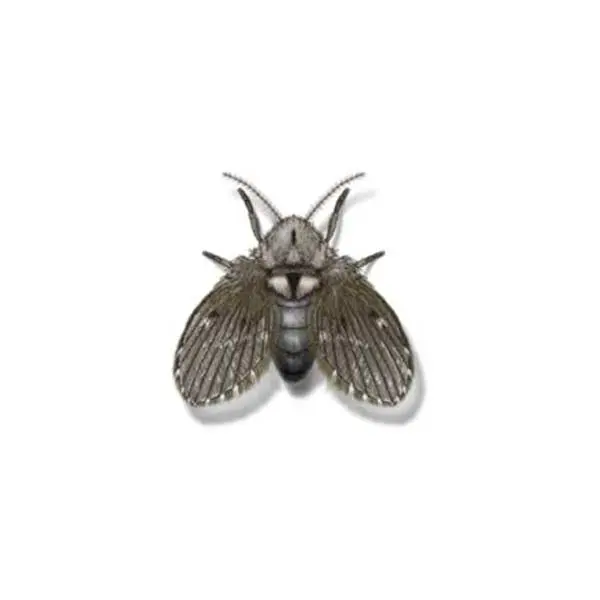
Drain Flies in Athens, GA
Drain flies, also called moth flies, are insects in the Psychodidae family named for their breeding behavior in drains. They occur throughout the United States and often become a household nuisance when they emerge unexpectedly from sinks and bathtub drains. Poor drainage conditions often contribute to their presence indoors. These weak fliers are frequently seen resting on bathroom walls in moist areas. They can develop in large populations in sewage treatment plants and may be carried by wind into nearby buildings, where their small size allows them to slip through standard fly screens.
Drain Fly Habitat
These tiny insects develop in thick, gelatinous organic material found in sewage beds, septic tanks, moist compost, and dirty garbage containers. They can also emerge from sink and bathtub drains, tree holes, rain barrels, wet organic matter, and bird nests with fecal buildup. Even minor accumulations of stagnant organic debris can support their development. They gather, mate, and lay eggs in moisture or standing water, with the slimy film inside drains and sewers serving as an ideal breeding site. Indoors, they are strongly attracted to light and are often seen on windows, doors, lamps, and other indoor lighting sources.
Drain Fly Behaviors, Threats, or Dangers
Drain flies are harmless in that they do not bite and do not damage buildings, plants, or animals. Still, because they originate from unsanitary sources, they may carry and spread disease-causing organisms. They often become a household nuisance, and their appearance is usually linked to clogged or dirty drains. Bathroom drains are the most frequent breeding locations in homes. As weak flyers, they are commonly observed crawling on walls and other surfaces rather than flying. If you are dealing with an infestation, reach out to a local fly control professional.