Carpenter Bees in Athens, GA
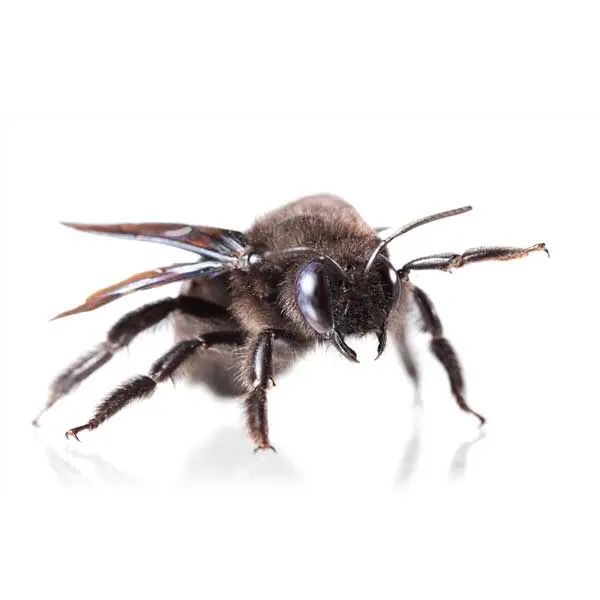
Named for their wood-boring behavior, carpenter bees create tunnels in which they raise their young. These bees are often seen hovering near wooden structures in the warmer months. Along with bumblebee queens, carpenter bees are among the largest native bees in the United States. They are found throughout the southern United States, including right here in Athens, GA. Carpenter bees do not consume wood but can still damage structures by tunneling into dry and weathered lumber.
Carpenter Bee Habitat
Carpenter bees are not social insects and instead create individual nests in trees, eaves, or the sides of structures. A carpenter bee infestation is often identified by piles of sawdust and pollen beneath areas where wood is being excavated. Males and females overwinter in old nest tunnels and emerge in spring to mate. After mating, the female selects a suitable piece of wood for nesting, while males spend much of their time hovering near nest sites. The female then excavates a gallery with her mandibles, provisions it with “bee bread,” lays an egg, and seals the chamber with chewed wood pulp.
Carpenter Bee Behaviors, Threats, or Dangers
Rarely aggressive, female carpenter bees will still sting if they are provoked. Those with allergies to bee venom should seek emergency care if stung. Male carpenter bees cannot sting, but they are known to act defensively when guarding nests. While they help with pollination, carpenter bees can cause damage to wood surfaces like fences, decks, siding, railings, windowsills, and outdoor furniture. Individual damage may be minor, but years of repeated activity can result in major deterioration. A bee control professional should be contacted if an infestation is suspected.