European Hornets in Athens, GA
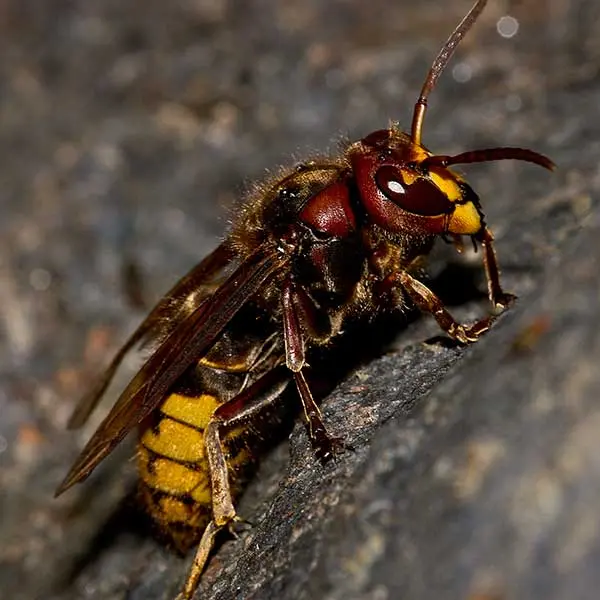
The European hornet, often called the brown or giant hornet, earned its name after being introduced from Europe to the eastern United States in the mid-1800s. Since then, it has become well established across many regions. These hornets are now found in about 30 states, ranging from the eastern U.S. westward to Louisiana and the Dakotas. They are significantly larger than yellowjackets and, unlike most stinging insects, remain active at night. Adults are often drawn to lights in the evening while searching for prey, which can make them especially concerning for homeowners.
European Hornet Habitat
As social wasps, European hornets usually nest in hollow trees but can also settle in wall voids and attics. They tend to seek out protected nesting areas. Unlike bald-faced hornets, their nests are rarely found hanging out in the open. These nests are commonly positioned at least 6 feet above ground and are sometimes built along the sides of houses. Occasionally, a portion of the gray, paper-like nest will be visible outside the nesting site. By late summer, colonies often reach 200 to 400 workers and may act aggressively when threatened.
European Hornet Behaviors, Threats, or Dangers
While European hornets appear fierce due to their size, they are generally not aggressive and will only sting when provoked. However, they are capable of stinging multiple times, and allergic reactions require prompt medical attention. Homeowners may encounter problems when these hornets build nests in attics, wall voids, barns, or hollow trees. As food sources decline in late summer, they often seek out sugary items and may damage fruit trees. Their attraction to porch lights can lead them to fly into windows at night, creating concern. If a nest is suspected, contacting a professional is the most reliable approach.