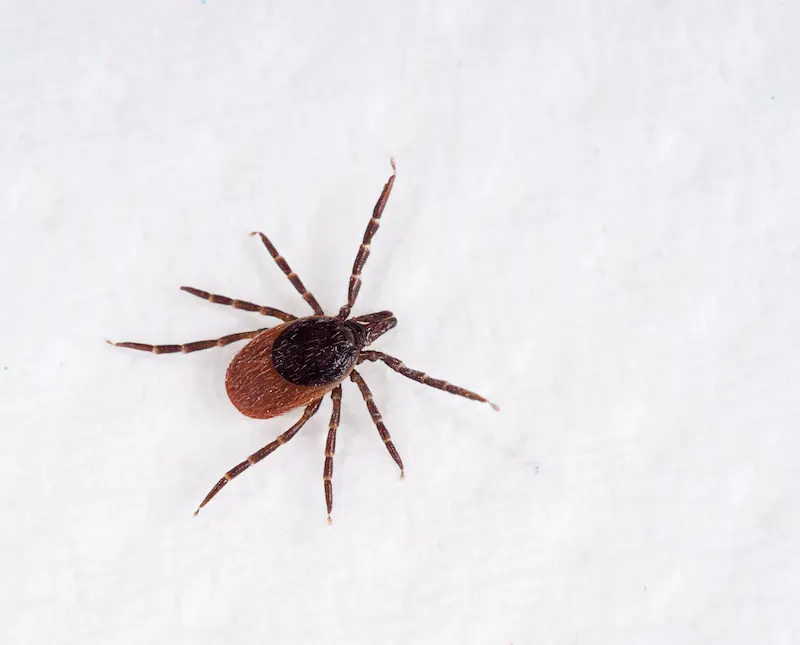
Black -Legged Ticks in Athens, GA
Also known as deer ticks, black-legged ticks are the leading vector of Lyme disease in the United States. They are commonly distributed throughout the eastern regions, favoring moist, wooded, deciduous forest environments. Their population range is largely dependent on the presence of white-tailed deer, which serve as their reproductive host. Disease transmission can occur at both the nymph and adult stages, including Lyme disease, babesiosis, and anaplasmosis. In 2018, Lyme disease accounted for approximately 23,558 confirmed cases, ranking it as the most prevalent vector-borne illness in the U.S.
Black-legged Tick Habitat
Black-legged ticks prefer shady, moist environments close to the ground, where they cling to tall grass, brush, and shrubs, usually within 18 to 24 inches of the soil. They are commonly found in lawns and gardens, especially near wooded edges and old stone walls. They are rarely found in the center of open lawns, instead favoring areas that border forested spaces. They also inhabit ornamental plantings and other shaded, humid landscapes. Maintaining a dry, well-trimmed yard can help reduce their presence around homes.
Black-legged Tick Behaviors, Threats, or Dangers
Black-legged ticks tend to bite most frequently in spring, summer, and fall. Outdoor activity during these seasons increases the likelihood of encountering ticks in grassy and wooded areas. Adult ticks can still be active in winter as long as temperatures remain above freezing. Nymphs and adult females are the most common biting stages affecting humans. To reduce the chance of bites, use an insect repellent with an EPA-registered ingredient like DEET and wear long-sleeved shirts and pants. Light-colored clothing, along with tucking pants into socks, can help you spot ticks more easily.